
Chapter 1: What Is Forex Trading? A Beginner’s Guide to the World’s Largest Market
Chapter 1: What Is Forex Trading? A Beginner’s Guide to the World’s Largest Market
Welcome to the world of Forex, as the cool kids call it. Before we dive into strategies and charts, let’s get one thing straight: this isn’t just another financial market. It’s the financial market. Every single day, around $9.5 trillion worth of currencies change hands globally (that’s straight from the latest BIS survey, if you’re keeping score). To give you some perspective, that’s more than the New York Stock Exchange handles in a month. We’re talking about a beast so big, so liquid, and so decentralized that it never sleeps and neither do the opportunities. So, buckle up. This is where your journey begins.
1. How Forex Trading Works
Unlike stock trading, where you buy shares of a single company, Forex always involves trading pairs of currencies. When you place a trade, you are simultaneously buying one currency while selling another.
Every Forex trade boils down to speculation on relative value:
- Going Long (Buy): You buy a currency pair if you believe the Base Currency will increase in value relative to the Quote Currency.
- Going Short (Sell): You sell a currency pair if you believe the Base Currency will decrease in value relative to the Quote Currency.
2. Who Participates in the Forex Market?
The market consists of several tiers of participants, from massive central institutions down to individual retail traders:
- Central Banks & Governments: Regulate money supply, interest rates, and manage national currency values (e.g., Federal Reserve, ECB).
- Commercial & Investment Banks: Handle high-volume transactions for international trade and interbank liquidity.
- Multinational Corporations: Exchange currencies to pay overseas employees, purchase foreign inventory, or hedge currency risk.
- Retail Traders: Individual traders, like us operating through online brokers to profit from price fluctuations.
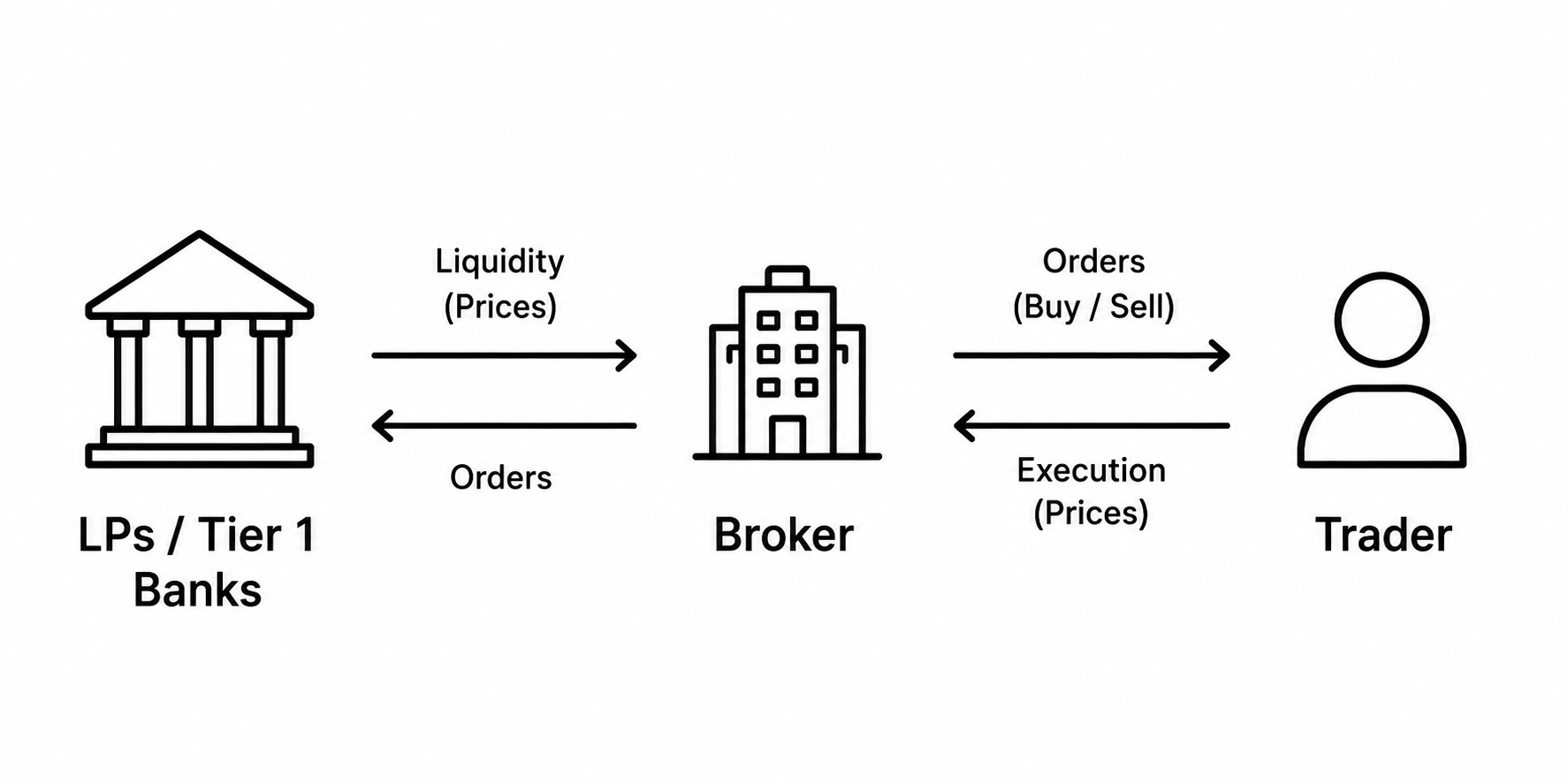
Below images is illustration of Fx market liquidity flow diagram. We will learn in detail about this in comming chapters.
3. Visualizing of a Real-World Chart
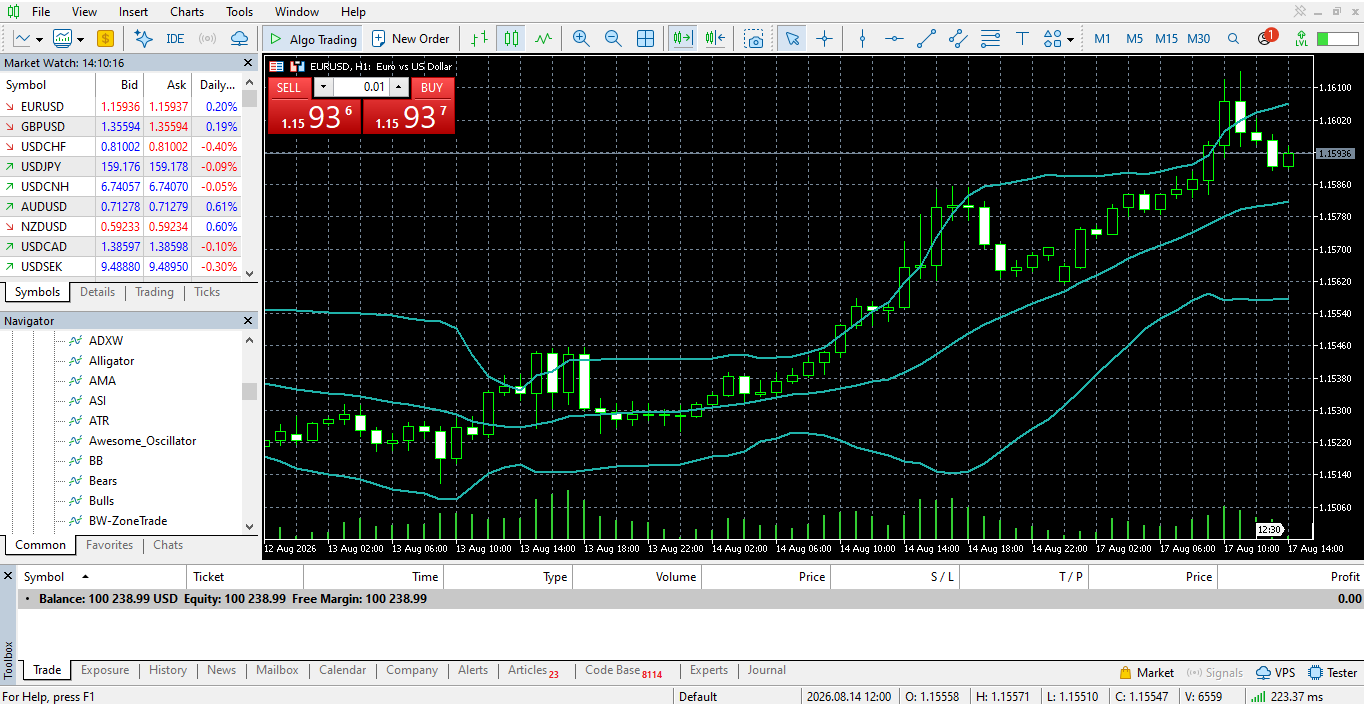
Below is a vector graphic representing a live EUR/USD trade setup on an online trading terminal. Notice the key technical components: price scales, moving average indicator, candlestick price action.
4. Key Advantages of the Forex Market
| Advantage | Details |
|---|---|
| 24/5 Operating Hours | Trades continuously from Sunday 5:00 PM EST through Friday 5:00 PM EST across Sydney, Tokyo, London, and New York sessions.
You can choose whichever session fits you. |
| High Liquidity | Due to massive daily volume, positions can be opened and closed instantly with minimal price slippage. |
| Two-Way Trading | Traders can profit equally in rising (bullish) or falling (bearish) markets. That means if market is in uptrend, you go long or buy and vice versa for short order. |
| Leverage Availability | Allows retail traders to control larger positions with a smaller upfront capital investment (margin). But more leverage comes with more risk if not managed properly. You will learn in details in comming chapters |
5. Summary Key Takeaway
Forex trading is not about buying physical money—it is about trading expectations. If you predict a country’s economic strength relative to another correctly, you profit from the fluctuating exchange rate.